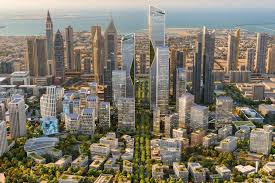

Dubai’s real estate market has experienced strong growth over recent years, driven by population increases, international investment, and infrastructure development. As 2026 approaches, many buyers and investors are asking whether Dubai property prices will rise or fall. Understanding this question requires examining economic indicators, supply pipelines, demand drivers, and broader market trends rather than relying on speculation.
Dubai’s property sector is influenced by both local and global factors, making price movement a result of multiple interconnected elements.
Current Market Momentum Entering 2026
Leading into 2026, Dubai continues to attract residents from across the world. Professionals relocating for work, entrepreneurs establishing businesses, and long-term visa holders all contribute to housing demand. This population growth supports residential absorption across apartments, townhouses, and villas.
Transaction activity has remained consistent in established communities, while emerging districts are seeing increased interest from investors seeking early entry into growth corridors. These dynamics suggest continued engagement across the market, although price movements vary by location and property type.
Supply and New Development Impact
Dubai maintains an active development pipeline, with new residential projects launched each year. This steady supply plays a significant role in balancing demand. While new units help prevent excessive price inflation, completed communities with mature infrastructure often retain stronger pricing due to limited availability.
In 2026, off-plan launches continue alongside handovers of earlier projects. This creates localized variations in pricing, where areas with high delivery volumes may experience stabilization while established districts maintain upward pressure.
The timing of project completions also affects short-term market conditions, particularly in communities undergoing rapid expansion.
Demand Drivers Shaping Price Direction
Several factors influence buyer demand in 2026. Employment growth, tourism activity, and foreign investment all support housing needs. Dubai’s long-term residency initiatives and business-friendly environment continue to attract international buyers seeking stable real estate markets.
Rental demand also plays a role, as investors assess yields when purchasing properties. Areas with strong tenant interest tend to maintain value more consistently, while locations with weaker rental performance may see slower price appreciation.
Lifestyle preferences have shifted toward larger homes and integrated communities, increasing demand for townhouses and villas in suburban developments.
Economic Conditions and Global Influence
Dubai’s property market does not operate in isolation. Global interest rates, currency movements, and geopolitical stability influence international investment flows. In 2026, buyers remain attentive to financing costs and global economic outlooks when making property decisions.
Local economic diversification efforts continue to strengthen Dubai’s resilience, supporting employment and infrastructure expansion. These initiatives contribute to long-term housing demand, even during periods of global uncertainty.
Currency advantages for certain international buyers also affect purchasing power, impacting transaction volumes in specific segments.
Price Trends Across Property Types
Apartments, townhouses, and villas respond differently to market conditions. Apartments in central districts typically experience steady demand from professionals and investors, while suburban villas attract families seeking long-term residences.
In 2026, price movement varies across these segments. Some communities experience modest appreciation driven by limited supply, while others stabilize due to increased inventory. Waterfront and lifestyle-oriented developments often maintain stronger buyer interest.
Rather than a single market direction, Dubai exhibits multiple micro-markets with distinct performance patterns.
Risk Factors and Market Balance
Potential risks include oversupply in certain districts, changes in lending conditions, and shifts in investor sentiment. However, Dubai’s regulatory framework and phased development approach help mitigate extreme volatility.
Buyers increasingly conduct due diligence by reviewing service charges, rental yields, and community infrastructure before purchasing. This more informed approach contributes to a balanced market environment.
In 2026, price corrections, where they occur, are typically localized rather than market-wide.
Outlook for Dubai Property Prices in 2026
Whether Dubai property prices rise or fall in 2026 depends largely on location, property type, and broader economic conditions. While some areas may see moderate growth supported by demand, others may experience stabilization as supply increases.
Overall, the market appears positioned for gradual adjustment rather than dramatic shifts. Buyers focused on fundamentals such as connectivity, amenities, and rental demand are better placed to navigate price changes.
Long-term perspectives remain central to property investment decisions.
Will Dubai property prices increase in 2026?
Some areas may see moderate growth, while others could stabilize depending on supply and demand.
Are villas performing better than apartments?
Performance varies by location, although villas have seen strong demand due to changing lifestyle preferences.
Does new supply affect prices?
Yes, increased supply can moderate price growth, particularly in rapidly developing areas.
Is 2026 a good year to invest in Dubai property?
Outcomes depend on property selection and financial planning rather than timing alone.
Are international buyers still active?
Yes, foreign investors continue to participate across multiple segments.
About The Author