When buyers look at mid-market projects in Dubai, the first question is usually price. The second—and more important—question is what that price actually delivers. In a segment where multiple projects compete on affordability, the real difference comes down to value per dirham, layout efficiency, and rental usability.
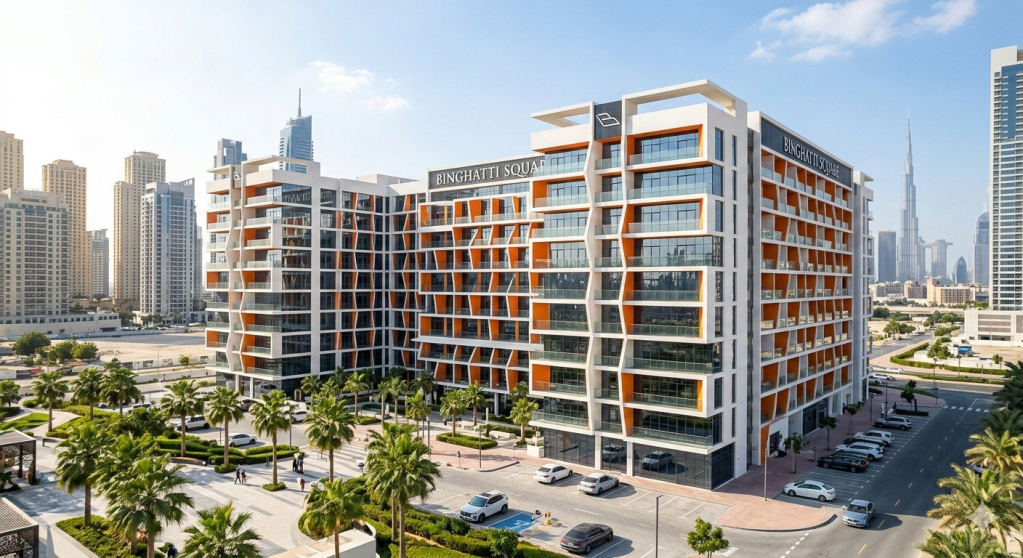
Binghatti Square 2 is positioned as an accessible entry point in Dubailand, targeting investors and end-users who want functional living spaces rather than premium branding. But affordability alone does not make it a good deal. The real evaluation is whether the project delivers usable value, rental performance, and long-term practicality at its price point.
This article breaks down exactly what you get when you invest in Binghatti Square 2, based on realistic pricing, layouts, rental demand, and market positioning.
Price vs Product: What Are You Paying For?
Binghatti Square 2 is priced within the lower-to-mid segment of Dubai’s off-plan market. Studios are expected to start around AED 550,000, while one-bedroom units typically range between AED 720,000 and AED 900,000. Two-bedroom units extend beyond AED 1.1 million depending on size and configuration.
At this price level, buyers are not paying for luxury positioning or prime location advantages. Instead, they are paying for functional housing in a demand-driven rental zone. The pricing reflects accessibility rather than exclusivity, which is important when evaluating long-term expectations.
Compared to central Dubai areas where prices per square foot are significantly higher, Binghatti Square 2 offers a lower entry point, but also operates within a segment that has clear limits on appreciation.
Layout Efficiency: Where Real Value Comes From
One of the most important aspects of mid-market projects is layout design. In Binghatti Square 2, units are designed to maximize usable space rather than aesthetic luxury. This means:
- Compact but practical room sizes
- Efficient kitchen and living layouts
- Focus on functionality over excess space
For investors, this is a key advantage. Efficient layouts directly impact rental demand because tenants in this segment prioritize usability over design features.
A well-designed one-bedroom unit that feels spacious and functional will often outperform a larger but poorly planned unit in terms of rental appeal.
Rental Performance: What Income Can You Expect?
The value of Binghatti Square 2 is closely tied to its rental potential. The Dubailand area supports strong demand from tenants looking for affordable housing with good connectivity.
Typical rental benchmarks indicate that:
- Studios can generate around AED 40,000 to AED 50,000 annually
- One-bedroom units range from AED 55,000 to AED 70,000
- Two-bedroom units can achieve up to AED 95,000
These figures translate into gross yields of approximately 7 percent to 9 percent, depending on purchase price and occupancy.
After accounting for service charges and maintenance, net returns typically fall between 5.5 percent and 7 percent. This makes the project attractive for investors focused on consistent income rather than long-term capital gains.
Real Cost Breakdown: Beyond the Purchase Price
A common mistake investors make is focusing only on the purchase price. In reality, the total investment includes additional costs.
For example, a one-bedroom unit purchased at AED 800,000 will require an additional 4 percent registration fee, bringing the total to approximately AED 832,000. Annual service charges may add around AED 8,000 to ongoing costs.
If the unit is rented at AED 65,000 per year, the net return remains close to 6.5 percent after expenses. This provides a realistic picture of what the investment delivers in practical terms.
Understanding these numbers is essential because they define whether the investment meets your financial expectations.
Location Value: Practical Connectivity Over Prestige
Binghatti Square 2 is located in Dubailand, within the Wadi Al Safa corridor. This location is not considered prime, but it offers strong practical advantages.
It provides access to major road networks, allowing connectivity to areas such as Downtown Dubai and Business Bay. It is also close to employment hubs like Silicon Oasis and Academic City, which support rental demand.
However, the location does not offer high-end retail, entertainment, or lifestyle infrastructure. This limits its appeal to premium tenants but strengthens its position within the affordable housing segment.
In simple terms, the location works because it is practical—not because it is prestigious.
Comparison: What You Get vs Premium Areas
When compared to areas like Business Bay or Dubai Hills Estate, Binghatti Square 2 offers a completely different value proposition.
In premium areas, buyers pay significantly higher prices for location, branding, and lifestyle. Rental yields are often lower because of higher acquisition costs.
In Binghatti Square 2, buyers pay less upfront and achieve higher rental yields, but with lower potential for price appreciation.
This creates a clear trade-off between income and long-term growth.
Who Gets the Most Value from This Project
Binghatti Square 2 is best suited for investors who understand the dynamics of mid-market real estate.
It works well for those who:
- Prioritize rental income over appreciation
- Want a lower entry point into Dubai property
- Are building a portfolio focused on cash flow
It is less suitable for buyers seeking luxury living, strong brand-driven demand, or long-term capital growth in prime locations.
Risks You Should Factor In
Every investment comes with limitations, and Binghatti Square 2 is no exception.
The biggest risk is competition. Dubailand has a high number of similar projects, which can impact rental pricing and occupancy levels.
Another factor is limited appreciation. While prices may increase over time, the growth is typically slower compared to premium areas.
Tenant turnover can also affect income stability, as renters in this segment are more price-sensitive and likely to relocate.
These risks do not make the investment weak, but they define the strategy required to make it work.
Strategic Insight: What You Are Really Buying
The real value of Binghatti Square 2 is not in long-term price growth. It is in consistent rental performance within a high-demand segment.
Investors who benefit most from this project are those who:
- Enter at competitive pricing
- Focus on occupancy rather than resale
- Manage operational costs effectively
This is a practical investment, not a speculative one. It performs through stability, not rapid growth.
Conclusion: What You Actually Get for the Price
Binghatti Square 2 delivers exactly what its pricing suggests—a functional, income-generating asset within Dubai’s mid-market segment.
You are not buying into exclusivity or premium appreciation potential. You are buying into:
- Affordable entry
- Strong rental demand
- Consistent yield performance
For investors who understand this positioning, the project offers a clear and structured opportunity. For those expecting luxury-level growth or rapid price increases, it may not meet expectations.
The value of this investment lies in clarity of purpose. If your goal is income, the numbers support it. If your goal is long-term appreciation, other options may be more suitable.
FAQs
What do you actually get in Binghatti Square 2 for the price?
You get a functional apartment designed for rental efficiency, with practical layouts and access to a demand-driven location.
Is Binghatti Square 2 good value for money?
It offers good value for investors focused on rental income, but limited value for those seeking luxury or strong appreciation.
What is the expected rental income?
One-bedroom units typically generate between AED 55,000 and AED 70,000 annually.
How does it compare to premium areas?
It offers lower entry prices and higher rental yields, but less appreciation potential compared to premium communities.
Who should buy this project?
It is ideal for investors targeting consistent rental income and affordable market entry.
What is the main limitation?
The main limitation is high competition within the mid-market segment, which can impact rental growth and resale value.
About The Author