A noticeable shift is happening in Dubai real estate. Investors are no longer chasing only prime locations—they are actively scanning emerging zones where pricing still leaves room for growth. This is exactly why Emaar Golf Fields is starting to appear on investor shortlists in 2026.
But here’s the important part: most buyers are looking at the obvious reasons—Emaar brand, golf-facing units, and relatively lower prices. What they are missing is how this project actually fits into the bigger investment cycle of Dubai South.
This article breaks down why Emaar Golf Fields is attracting attention, and more importantly, what most investors fail to understand before entering.
The Real Reason Investors Are Watching Emaar Golf Fields
The primary reason is not the project itself—it is where it sits in the market cycle.
Dubai real estate typically moves in phases:
- Early-stage (low prices, low demand)
- Growth phase (infrastructure + rising demand)
- Maturity (high prices, stable demand)
Emaar Golf Fields is positioned in the early-to-mid transition phase. This is where investors look for entry because prices are still below mature communities, but infrastructure development has already started.
In simple terms, investors are not just buying a property—they are buying into a timeline of future demand.
Price Positioning: Why It Looks Attractive
Emaar Golf Fields offers entry pricing that is significantly lower than central Dubai areas. One-bedroom units are expected to start around AED 950,000 to AED 1.2 million, with price per square foot ranging between AED 1,100 and AED 1,400.
This is where the attraction begins.
When compared to:
- Dubai Hills Estate (AED 1,800+ per sq ft)
- Dubai Creek Harbour (AED 1,600+ per sq ft)
Emaar Golf Fields appears “cheap.”
But here’s what most investors miss:
This price is not a discount—it is a reflection of location maturity and current demand levels.
What Most Investors Are Missing About Pricing
Many buyers assume that lower price automatically means undervaluation. In reality, pricing in Emaar South is adjusted based on:
- Current population density
- Existing rental demand
- Infrastructure completion
So while Emaar Golf Fields is cheaper, it is not necessarily underpriced. It is priced correctly for where the area stands today.
The opportunity exists only if the area successfully transitions into the next growth phase.
Rental Reality: The Overlooked Factor
Investors often enter off-plan projects expecting strong rental income immediately after handover. This is one of the most common mistakes.
In Emaar South, rental demand is still developing. Current benchmarks suggest:
- One-bedroom units rent between AED 55,000 and AED 70,000 annually
This results in:
- Gross ROI: 6.5% to 8%
- Net ROI: around 5% to 6%
These are stable returns, but not aggressive.
What Investors Miss
The project is not designed to deliver high rental income from day one. The real value is expected to build over time as:
- Population increases
- Infrastructure improves
- Demand stabilizes
The Location Misconception
One of the biggest misunderstandings about Emaar Golf Fields is the assumption that proximity to major projects automatically translates into immediate demand.
Yes, the project is near:
- Al Maktoum International Airport
- Expo City Dubai
But these are long-term drivers, not short-term catalysts.
Most investors underestimate how long it takes for infrastructure to translate into actual residential demand. This creates a gap between expectations and reality in the early years.
The Hidden Advantage: Golf-Facing Positioning
While many investors focus on price and ROI, one factor that is often overlooked is micro-location within the community.
Emaar Golf Fields benefits from:
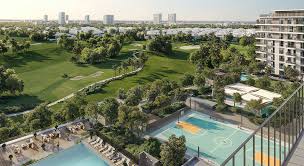
- Golf-facing views
- Limited premium positioning
- Better long-term resale appeal
In Emaar communities, golf-facing units tend to outperform standard units over time due to scarcity and buyer preference.
This is one of the few factors that can create relative outperformance within the same area.
Real Investor Scenario: What the Numbers Actually Say
Consider an investor purchasing a one-bedroom unit at AED 1 million.
After including transaction costs, the total investment is approximately AED 1.04 million. If the unit generates AED 65,000 annually in rent, the gross yield is just over 6 percent.
After deducting service charges and maintenance, the net return falls closer to 5.5 percent.
What This Means
The investment is not driven by rental income. The real upside comes from:
- Rental growth over time
- Capital appreciation as the area matures
Comparison: Why Investors Choose This Over Other Areas
When comparing Emaar Golf Fields to other areas, the decision comes down to entry point vs stability.
Dubai Hills Estate offers immediate demand and strong rental performance, but entry prices are significantly higher.
Dubai Creek Harbour offers a balance between growth and stability, but again at a higher cost.
Emaar Golf Fields offers:
- Lower entry price
- Higher long-term upside potential
- Greater dependency on future development
This makes it more appealing to investors who are comfortable with delayed returns.
Who Is Actually Investing Here
The typical buyer profile for Emaar Golf Fields includes:
- Investors with a 3 to 5 year horizon
- Overseas buyers entering Dubai at a lower price point
- Portfolio investors looking to diversify into growth areas
These buyers are not focused on immediate income—they are focused on positioning for future growth.
Risks Most Investors Underestimate
There are several risks that are often overlooked when evaluating Emaar Golf Fields.
Supply is a major factor. Emaar South has multiple ongoing launches, which increases competition in both sales and rentals.
Infrastructure timing is another critical risk. Delays can slow down demand growth and impact price appreciation.
Liquidity is also a concern. Selling a property in an emerging area may take longer compared to established locations.
Understanding these risks is essential because they directly impact investment outcomes.
Strategic Insight: The Real Opportunity
The real opportunity in Emaar Golf Fields is not in buying a “cheap” property—it is in entering at the right stage of development.
Investors who benefit the most from projects like this are those who:
- Enter early
- Hold through the development phase
- Exit when demand stabilizes
This requires patience and a clear strategy, not short-term expectations.
Conclusion: What Investors Should Really Focus On
Emaar Golf Fields is attracting investors for the right reasons—but many are approaching it with the wrong expectations.
The project offers a structured entry into a developing area with long-term growth potential. However, it is not a shortcut to quick profits or high rental income.
The key is understanding what you are actually buying. This is not just a property—it is exposure to a future market.
Investors who align their strategy with this reality are more likely to benefit. Those who expect immediate returns may find the investment underwhelming.
FAQs
Why are investors interested in Emaar Golf Fields?
Investors are attracted by lower entry prices and long-term growth potential within Emaar South.
Is Emaar Golf Fields undervalued?
It is fairly priced for its current development stage. The upside depends on future demand growth.
What ROI can investors expect?
Gross returns are expected between 6.5 percent and 8 percent, with net returns around 5 percent to 6 percent.
Is this a good project for rental income?
It offers moderate rental income, but it is not a high-yield investment.
What is the biggest misconception about this project?
The biggest misconception is expecting immediate demand and strong rental performance.
Who should invest in Emaar Golf Fields?
It is best suited for long-term investors targeting appreciation rather than short-term returns.
About The Author