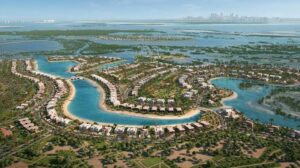
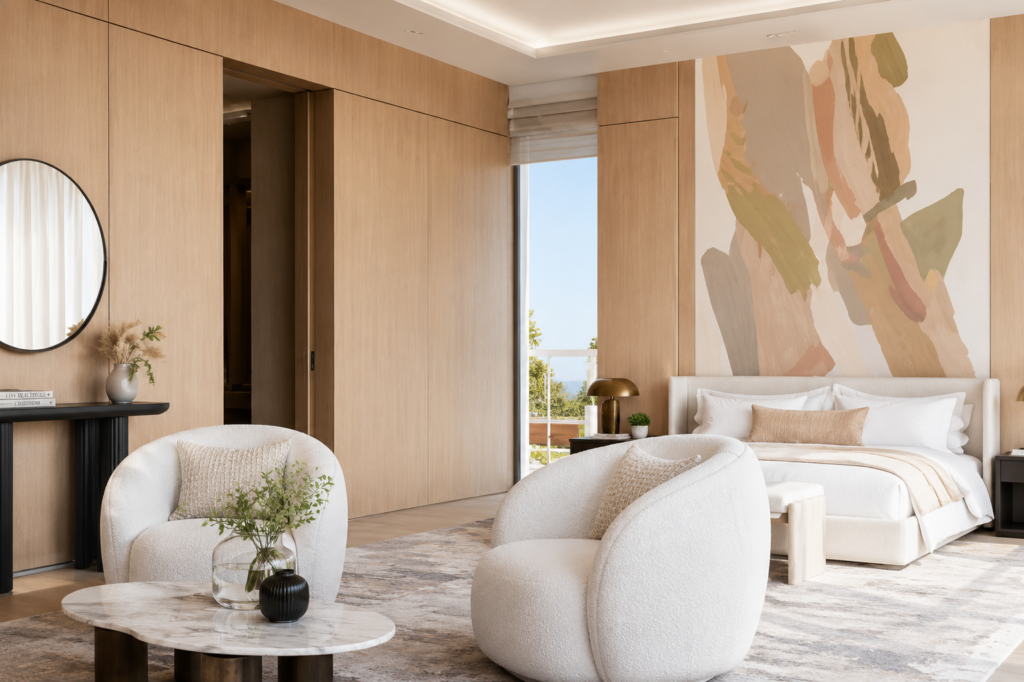
Investors looking at tilal islands grand mansion are not buying into a conventional off-plan cycle. They are entering a narrow luxury segment where land scarcity, low-density planning, and high-ticket resale psychology matter more than short-term rental yield. That changes how the asset should be evaluated.
The project sits within Sharjah near the master-planned Tilal City community, developed under Tilal Properties. Unlike mid-market inventory competing on payment plans and launch discounts, this segment competes on exclusivity and long-term capital positioning.
Why the Premium Villa Segment Is Behaving Differently
Most UAE residential growth over the last three years has been driven by apartments and compact townhouses. Ultra-large mansion inventory has moved more selectively, yet price resilience has remained noticeably stronger in supply-constrained waterfront communities.
That matters because luxury buyers rarely react to mortgage rate pressure the same way mid-income investors do. The buyer pool is smaller, but capital quality is stronger. In markets like Sharjah, where branded or waterfront mansion stock remains limited, price corrections tend to be slower but liquidity cycles become longer.
Tilal islands grand mansion appears positioned for appreciation-led returns rather than aggressive rental income Dubai strategies. Investors expecting immediate high cash flow may misread the investment thesis entirely.
Where Tilal Islands Grand Mansion Sits on the Pricing Curve
Current luxury mansion pricing in Sharjah waterfront communities generally ranges between AED 1,350 and AED 1,850 per square foot depending on plot scale, waterfront orientation, and architectural positioning. Tilal islands grand mansion is entering the market closer to the upper band of that range.
That pricing initially appears expensive compared with villas in peripheral Sharjah districts. The gap narrows once land allocation and private frontage are factored into replacement cost analysis. Ultra-premium plots cannot be replicated easily because future master communities are increasingly density-driven.
A realistic acquisition scenario for investors would include a total entry cost between AED 12 million and AED 30 million depending on plot size and customization variables. Holding costs remain manageable relative to comparable Dubai mansion districts where service charges are materially higher.
The Real Return Equation Behind Tilal Islands Grand Mansion
Rental yield is unlikely to be the primary strength here. Gross yields may stabilize between 3.8% and 5.1%, which sits below high rental yield property UAE benchmarks found in apartment-heavy zones.
The stronger investment angle is long-duration capital preservation with gradual appreciation. If Sharjah luxury waterfront supply remains restricted, annual appreciation potential could reasonably average 7% to 10% during strong market cycles.
There is another layer many investors overlook. Mansion buyers in the UAE increasingly prioritize privacy and plot exclusivity over tower amenities. That trend supports resale defensibility even when broader property price Dubai momentum slows.
Cash flow investors may find better yield profiles elsewhere. Capital growth investors focused on scarcity may view tilal islands grand mansion differently.
Demand Signals That Actually Matter Here
Luxury villa demand in the UAE is no longer purely local. A growing share of buyers are regional family offices, expatriate entrepreneurs, and cross-border investors seeking lower-density residential assets.
Sharjah has historically lagged behind Dubai in luxury positioning, yet that gap has started creating pricing inefficiencies. Comparable waterfront villa assets in Dubai often trade 40% to 90% higher on a square-foot basis.
That spread creates room for selective appreciation if infrastructure connectivity and premium community branding continue improving. The investment case strengthens further if Sharjah successfully attracts more upper-income relocations from Dubai seeking larger land parcels.
Still, investor demand quality matters more than transaction volume here. Mansion markets can appear active during launch cycles while actual secondary liquidity remains thin.
A Realistic Five-Year Investor Projection
Assume an investor acquires a mansion for AED 18 million with phased payment exposure during construction. Estimated annual carrying costs and maintenance could reach AED 180,000 to AED 260,000 depending on landscaping and waterfront upkeep.
If annual appreciation averages 8%, the asset could approach AED 26.4 million within five years. After transaction costs, net capital gain could still exceed AED 6 million under favorable conditions.
The downside scenario deserves equal attention. If regional luxury supply expands aggressively or economic growth slows, resale periods may stretch beyond twelve months. Mansion assets rarely provide fast exits during soft cycles.
That liquidity risk is the tradeoff investors accept in exchange for scarcity exposure.
How It Compares With Competing Luxury Communities
Compared with Dubai Hills Estate or Palm Jumeirah mansions, tilal islands grand mansion offers lower entry pricing but weaker international brand recognition. Compared with Aljada premium villas, it offers stronger exclusivity but lower tenant depth.
The project occupies an unusual middle ground. It is neither a high-yield investment nor a purely speculative launch flip. Its positioning resembles a long-term land-backed luxury allocation strategy.
That distinction matters because many investors still analyze mansion projects using apartment-style ROI assumptions. Those frameworks fail in low-density luxury markets.
Which Investors Are Actually Positioned for This Asset
This investment suits buyers prioritizing wealth preservation, generational holding structures, or long-horizon appreciation. Investors seeking immediate rental income Dubai performance will likely find stronger numbers in smaller-format units across Dubai Marina or JVC.
Family offices and high-net-worth regional investors may see more value because they typically evaluate downside protection differently. Large land components often outperform compact luxury inventory during inflationary cycles.
End-users with flexible holding timelines may also benefit if they value lifestyle utility alongside appreciation potential. Pure short-term flippers face considerably higher execution risk.
Risks That Should Not Be Ignored
Luxury markets are emotionally driven at the top end. That increases volatility when sentiment weakens. A mansion may retain theoretical value while still taking months to transact.
There is also concentration risk. Investors allocating large capital into a single luxury asset reduce diversification flexibility. One underperforming resale cycle can materially impact portfolio liquidity.
Supply pressure remains another variable. If competing developers accelerate premium waterfront inventory launches across Sharjah or northern emirates, pricing power could soften faster than expected.
The project is not overpriced in absolute terms, but it does depend heavily on future prestige positioning remaining intact.
The Strategic Insight Most Investors Miss
The strongest argument for tilal islands grand mansion is not yield. It is replacement scarcity.
Luxury waterfront land becomes exponentially harder to reproduce as master communities mature. Investors who understand this typically focus less on year-one ROI and more on future buyer psychology.
That creates a fundamentally different investment profile from standard off-plan investment Dubai strategies. The asset behaves closer to a long-term prestige allocation than a transactional income property.
Final Investment Perspective on Tilal Islands Grand Mansion
Tilal islands grand mansion makes sense for investors prioritizing long-term capital appreciation, land scarcity exposure, and portfolio prestige rather than short-term rental optimization.
The numbers support a moderate-to-strong appreciation thesis if Sharjah continues attracting affluent buyers and premium supply remains controlled. The weaker side of the equation is liquidity speed and rental yield sustainability compared with smaller Dubai assets.
For investors seeking defensive wealth storage with upside linked to scarcity, the project has a credible investment case. For yield-focused buyers chasing fast cash flow, there are more efficient opportunities elsewhere in the UAE market.
FAQs
- Is tilal islands grand mansion better for appreciation or rental income?
The project is structurally more aligned with long-term capital appreciation because expected rental yields remain lower than apartment-focused investment communities. - What ROI range can investors realistically expect here?
Investors may target annualized appreciation-led returns between 7% and 10% during favorable market cycles, assuming stable luxury demand conditions. - Does Sharjah luxury property have enough resale depth?
Sharjah’s premium segment is growing, but resale liquidity still remains materially lower than established luxury districts within Dubai. - Is tilal islands grand mansion overpriced compared with Dubai villas?
The pricing looks relatively competitive when adjusted for waterfront land allocation and compared with prime Dubai mansion communities. - Who is the ideal investor profile for this project?
This asset suits high-net-worth investors prioritizing capital preservation, exclusivity, and long-term portfolio diversification rather than aggressive rental cash flow. - Can investors expect strong rental demand in this segment?
Tenant demand exists for large luxury villas, though occupancy cycles are slower because the target renter pool is comparatively limited. - How risky is liquidity during weaker market conditions?
Luxury mansion assets typically face longer resale timelines during soft economic periods because buyer pools narrow significantly at higher ticket prices. - Does the payment plan improve investment viability?
Flexible phased payment structures can improve capital efficiency by reducing immediate exposure during construction and early development stages. - How does this compare with Dubai waterfront investments?
Tilal islands grand mansion offers lower entry pricing than most Dubai waterfront communities, though global brand recognition remains comparatively weaker. - Could future supply pressure reduce appreciation potential?
Yes, accelerated luxury launches across Sharjah or nearby emirates could dilute scarcity advantages and weaken future resale pricing momentum.
About The Author