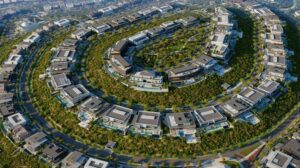
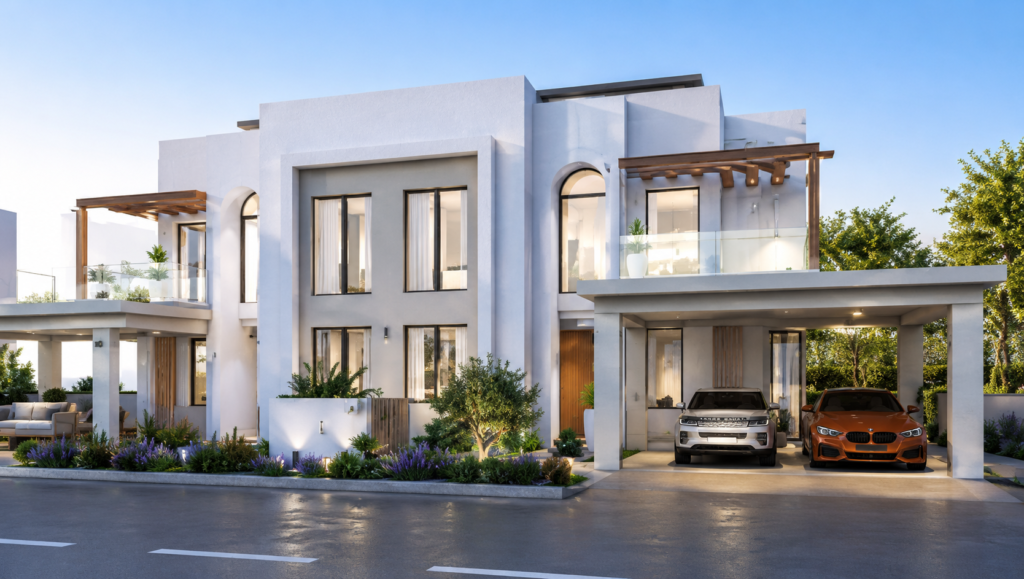
The Dubai property cycle has entered a phase where investors are becoming increasingly selective. Rapid price growth across several communities has shifted attention toward projects that offer a balance between affordability, rental demand, and future capital appreciation. Hayat 6 enters this conversation as a project that appears positioned between pure yield-driven investments and long-term capital growth opportunities.
For investors evaluating the best property investment in Dubai, the central question is not whether Hayat 6 is attractive on paper. The real question is whether the expected returns adequately compensate for the risks associated with market competition, future supply, and tenant demand dynamics.
Why Current Market Conditions Favor Selective Entry Points
Dubai’s residential market continues to benefit from population growth, business expansion, and sustained international investor activity. Yet not every community is experiencing identical performance.
Projects targeting the mid-market segment have generally demonstrated stronger occupancy resilience compared with ultra-premium developments. This matters because sustainable occupancy often drives investment performance more reliably than speculative price appreciation.
Hayat 6 appears positioned within a pricing bracket where end-user demand and investor demand overlap. That dual demand profile typically creates deeper resale liquidity compared with projects dependent solely on investor activity.
For buyers seeking an off-plan investment Dubai opportunity, timing remains a key factor. Entering before completion can create pricing advantages, but returns depend heavily on whether future supply remains controlled within the surrounding area.
Where Hayat 6 Sits on the Pricing Curve
One of the most important investment considerations is price per square foot relative to competing developments.
If entry pricing remains within the mid-market range of approximately AED 900–1,300 per sq. ft., investors gain access to a segment where tenant demand is usually broader and less cyclical than luxury-focused communities.
Transaction costs must also be incorporated into any ROI calculation. Registration fees, service charges, maintenance provisions, and financing costs can materially affect net returns.
An investor purchasing a unit priced at AED 900,000 may ultimately commit closer to AED 950,000–980,000 after acquisition expenses. Ignoring these costs often leads to unrealistic return projections.
Income Potential Versus Acquisition Cost
The strongest investment case for Hayat 6 appears linked to rental performance rather than aggressive short-term appreciation.
Assuming annual rental income between AED 60,000 and AED 75,000 on a mid-sized unit, gross rental yields could range from approximately 6% to 8%.
After accounting for service charges, vacancy allowances, maintenance reserves, and management expenses, realistic net yields may settle between 4.8% and 6.3%.
Those figures compare favorably with many global property markets and position Hayat 6 within the high rental yield property UAE category, provided rental demand remains stable after project completion.
The more interesting observation is that investors may achieve stronger risk-adjusted returns through consistent cash flow rather than relying on rapid price appreciation.
Demand Drivers That Could Influence Occupancy
A property’s success ultimately depends on tenant behavior.
Projects attracting working professionals, young families, and long-term residents generally experience lower turnover and steadier rental income. Communities with practical connectivity often outperform locations driven primarily by tourism or speculative buying.
Hayat 6 benefits if surrounding infrastructure continues improving and employment centers remain accessible. Tenants typically prioritize convenience and affordability before premium amenities.
This creates an important advantage during softer market periods because necessity-based demand tends to remain more stable than lifestyle-driven demand.
A Practical Investor Return Scenario
Consider an investor purchasing a unit for AED 1 million.
If the property generates AED 70,000 in annual rent, gross yield reaches 7%. After deducting ownership costs, net income may fall to approximately AED 55,000–60,000 annually.
If market appreciation averages 3%–5% annually over a five-year holding period, total annualized returns could approach 8%–11%.
Under a stronger market scenario, appreciation closer to 7% annually could push total returns above 12%. Under weaker conditions with rising supply pressure, returns may compress into the 5%–7% range.
The range highlights why cash flow should be viewed as the primary investment driver rather than speculative resale gains.
How Hayat 6 Compares With Competing Communities
Compared with established prime districts, Hayat 6 may offer a lower entry price and potentially stronger yield profile.
Prime locations often deliver higher resale prestige but lower rental yields because acquisition costs are significantly higher.
Emerging communities typically provide better income efficiency but carry greater uncertainty regarding future supply levels and price growth.
For investors focused on real estate ROI Dubai metrics, Hayat 6 appears closer to an income-producing asset than a pure appreciation play.
That distinction is important because investment objectives should dictate asset selection.
Which Investor Profile Fits Hayat 6 Best?
Hayat 6 may appeal to investors prioritizing predictable rental income and moderate long-term appreciation.
Buyers seeking immediate flipping opportunities may find stronger alternatives elsewhere because appreciation timelines in mid-market projects can be less aggressive.
End-users also benefit from this positioning because communities supported by genuine residential demand often maintain stronger occupancy and resale stability over time.
Investors building diversified property portfolios may view Hayat 6 as a cash-flow-oriented allocation rather than a speculative growth asset.
Risks That Deserve More Attention
Supply remains the largest variable.
If multiple competing developments are delivered simultaneously, rental growth could slow and occupancy periods may lengthen.
Liquidity risk also deserves consideration. Mid-market properties generally sell faster than luxury units, but resale velocity can still decline during periods of weaker investor sentiment.
Interest rate movements create another layer of uncertainty for leveraged investors. Higher borrowing costs can reduce purchasing power and affect future buyer demand.
None of these risks invalidate the investment case, but they influence expected returns.
The Strategic Angle Most Investors Miss
Many investors focus exclusively on projected appreciation while overlooking rental sustainability.
The strongest long-term performers often combine moderate appreciation with stable occupancy and recurring rental income.
Hayat 6 appears positioned within that category. The project’s value proposition becomes more compelling when evaluated as a long-term income asset rather than a short-term trading opportunity.
That distinction changes the investment thesis entirely.
Final Verdict: Is Hayat 6 Worth Investing In?
From a risk-adjusted perspective, Hayat 6 presents a credible investment opportunity for buyers seeking balanced exposure to Dubai real estate.
The project does not appear designed for aggressive speculation. Its strength lies in combining accessible entry pricing, realistic rental yield potential, and a tenant base that supports long-term occupancy.
Investors targeting annualized returns in the 8%–11% range through a mix of rental income and moderate appreciation may find the opportunity attractive.
For those seeking explosive capital gains, alternative communities may offer greater upside but usually with higher volatility and increased downside risk.
Viewed through an institutional lens, Hayat 6 is best categorized as a cash-flow-first investment with measured growth potential rather than a high-risk appreciation play.
Frequently Asked Questions
• What is the expected ROI for Hayat 6 investors?
A realistic blended return combining rental income and appreciation may range between 8% and 11% annually under normal market conditions.
• Does Hayat 6 qualify as a high rental yield property UAE opportunity?
Projected gross yields around 6%–8% place the project within the range many investors associate with income-focused UAE properties.
• Is capital appreciation or rental income the stronger investment driver?
Rental income appears to be the primary return source, while appreciation serves as a secondary performance contributor.
• How does Hayat 6 compare with premium Dubai communities?
It generally offers lower acquisition costs and potentially better rental efficiency, though premium locations may deliver stronger prestige-based pricing power.
• What is the biggest investment risk associated with Hayat 6?
Future supply growth within nearby communities could place pressure on rents and limit short-term resale appreciation.
• Can international investors benefit from this project?
International buyers seeking recurring income and diversified real estate exposure may find the risk-return profile attractive.
• Is now a reasonable time to enter the project?
Early-stage pricing can provide advantages if future demand remains strong and construction milestones are delivered as planned.
• What tenant profile is most likely to rent here?
Working professionals and family-oriented residents typically represent the strongest long-term demand base for comparable developments.
• How important is the payment plan in the investment calculation?
Flexible payment structures can improve cash-on-cash returns by reducing upfront capital requirements during the holding period.
• Could Hayat 6 outperform other off-plan investment Dubai projects?
Performance depends on delivery timelines, pricing discipline, and future supply conditions, though its income profile compares favorably with many alternatives.
About The Author