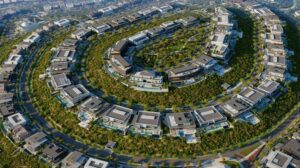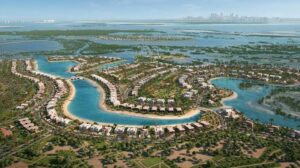
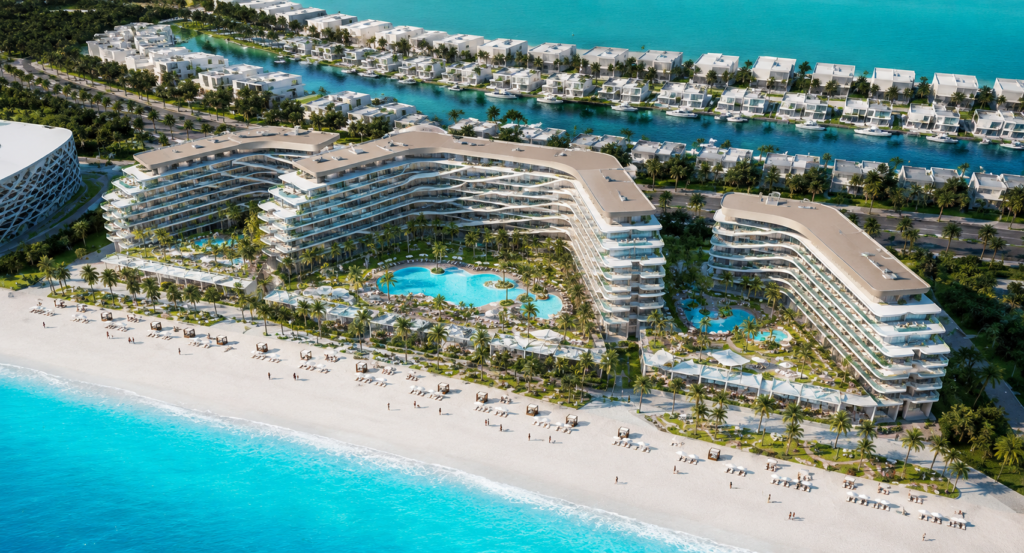
Sobha Tranquil Beach Residences is part of the broader Siniya Island master development, a coastal destination emerging in Umm Al Quwain. Developed by Sobha Realty, the project enters the market at a stage where investors are effectively pricing future demand rather than existing demand.
That distinction is critical.
Many of the highest-performing real estate investments are acquired before infrastructure, tourism activity, and residential ecosystems reach maturity. At the same time, many underperforming investments begin with similar narratives.
The objective is not to determine whether the project is attractive. The objective is to determine whether expected returns adequately compensate investors for the risks involved.
Why Capital Is Shifting Toward Emerging Coastal Markets
The strongest real estate returns often occur outside fully established markets.
Over the past three years, property price Dubai growth has pushed many investors toward alternative locations where appreciation potential remains less compressed.
Siniya Island benefits from this trend.
Investors seeking exposure to waterfront real estate without paying premium Dubai beachfront valuations are increasingly evaluating northern emirate opportunities. The attraction is not current rental performance. It is future repricing potential.
That creates an investment environment where timing becomes more important than immediate cash flow.
Where Sobha Tranquil Beach Residences Fits Within the Value Equation
Current pricing starts at approximately AED 1.4 million for one-bedroom units, placing entry costs below many prime waterfront assets in Dubai but above numerous inland communities on a price-per-square-foot basis.
This creates an unusual positioning.
The project is neither a value acquisition nor an ultra-premium purchase. Instead, investors are paying for anticipated scarcity within a master-planned coastal environment.
The implication is straightforward.
Future appreciation must carry a significant portion of the return profile because rental yields alone may not justify the acquisition price.
The payment plan structure reduces near-term capital requirements, which improves investment efficiency during construction and preserves liquidity for portfolio diversification.
Income Potential Versus the Actual Cost of Ownership
Many investors focus on gross rental yield while ignoring the broader economics of ownership.
A more realistic model assumes acquisition around AED 1.4 million with annual rental income ranging from AED 80,000 to AED 95,000 once the destination matures.
That translates into gross rental yields of roughly 5.7% to 6.8%.
After service charges, vacancy assumptions, maintenance provisions, and leasing costs, net yields are likely closer to 4.8% to 5.9%.
These figures remain competitive compared with many international property markets but do not place the project among the highest rental yield property UAE opportunities currently available.
This matters because investors should evaluate the project primarily through an appreciation lens rather than an income lens.
Demand Drivers That Could Strengthen Pricing Power
Tenant demand quality often determines whether projected returns materialize.
Sobha Tranquil Beach Residences is unlikely to compete directly with employment-driven districts such as Business Bay or Dubai Marina. Instead, demand will likely originate from affluent residents seeking coastal living, second-home buyers, remote professionals, and long-stay leisure tenants.
This creates both opportunity and risk.
A narrower tenant profile can support stronger rental pricing during favorable market conditions. However, it can also reduce occupancy resilience during weaker economic cycles.
Investors should recognize that premium rents do not automatically translate into consistent occupancy.
A Real Investor Scenario Based on Conservative Assumptions
Assume an investor acquires a one-bedroom apartment at AED 1.45 million.
Assume annual rent stabilizes at AED 88,000 after handover.
Gross rental yield would reach approximately 6.1%.
If annual appreciation averages 5% over a seven-year period following handover, total annualized returns may approach 10% to 12%.
The downside scenario looks materially different.
If appreciation remains limited to 2% annually and rental growth slows, annualized returns could compress to approximately 5% to 7%.
This spread highlights the central investment question.
The project’s success depends more on destination growth than on building-level performance.
How Sobha Tranquil Beach Residences Compares With Alternative Investments
Compared with Al Marjan Island, Sobha Tranquil Beach Residences enters a market with lower international recognition but potentially earlier-stage appreciation potential.
Compared with established Dubai waterfront districts, investors gain a lower total entry price while accepting reduced liquidity and a smaller tenant base.
Compared with inland communities such as Jumeirah Village Circle, rental yields may ultimately be similar, but the appreciation narrative differs substantially.
This comparison reveals an important insight.
Investors are effectively choosing future scarcity value instead of present rental depth.
Which Investment Profiles Align Best With This Project?
The project is most suitable for investors comfortable with long holding periods.
Buyers seeking immediate rental income and predictable occupancy should generally favor completed assets in mature communities.
Investors pursuing off-plan investment Dubai alternatives with greater upside potential may find the risk-reward equation more compelling here.
End-users planning eventual occupancy gain additional flexibility because they are less dependent on short-term market cycles.
Risks That Could Challenge Return Expectations
Execution risk remains significant.
The longer the construction timeline, the greater the exposure to changing market conditions, financing costs, and economic cycles.
Supply risk also deserves attention.
As northern emirates attract increasing developer activity, future inventory may compete for the same buyer and tenant demographics.
Liquidity presents another consideration.
Emerging coastal destinations generally experience fewer transactions than central Dubai communities, creating longer exit timelines during softer market periods.
These risks do not invalidate the investment case, but they should materially influence underwriting assumptions.
The Underappreciated Signal Behind the Development
Sophisticated investors often focus less on the individual project and more on the direction of institutional capital.
Sobha Tranquil Beach Residences is part of a larger trend involving infrastructure spending, tourism development, and residential expansion across coastal northern emirates.
Historically, areas receiving sustained capital investment frequently experience valuation growth before population growth becomes fully visible.
This does not guarantee strong returns.
It does, however, strengthen the probability that future demand will be greater than current demand.
Final Verdict
Sobha Tranquil Beach Residences should be viewed primarily as a long-term appreciation vehicle rather than a pure rental income asset.
The strongest investment case emerges for buyers seeking exposure to early-stage coastal growth and willing to hold through multiple market cycles.
Investors focused on immediate cash flow can find stronger yield profiles elsewhere. Investors seeking real estate ROI Dubai alternatives through strategic positioning in emerging waterfront markets may find the opportunity more attractive.
The project appears reasonably positioned if future infrastructure and destination development proceed as planned.
The investment thesis weakens if appreciation expectations become excessively optimistic or if competing supply grows faster than demand.
For patient investors prioritizing capital growth over short-term income, Sobha Tranquil Beach Residences represents a calculated rather than speculative allocation.
FAQ
Is Sobha Tranquil Beach Residences primarily an appreciation-focused investment?
Yes, the investment thesis relies more heavily on long-term capital growth than immediate rental income generation.
What rental yield range appears realistic after handover?
Most conservative projections suggest gross rental yields between 5.7% and 6.8% under stabilized market conditions.
How does the project compare with Dubai waterfront properties?
It offers a lower entry price than many Dubai waterfront assets while carrying higher development and liquidity risks.
Can the payment plan improve investment flexibility?
Structured payment schedules help preserve investor liquidity and reduce the need for large upfront capital commitments.
What tenant profile is expected to support rental demand?
Demand is likely to come from affluent residents, second-home owners, remote workers, and lifestyle-oriented tenants.
Does the location support future capital appreciation?
The broader Siniya Island development strategy creates conditions that could support long-term valuation growth.
What is the most significant investment risk?
Execution timelines and future supply growth represent the largest variables influencing projected investment returns.
Is this a suitable off-plan investment for conservative investors?
It may suit conservative investors only if they are comfortable with longer holding periods and moderate liquidity risk.
How does it compare with Al Marjan Island opportunities?
Al Marjan currently enjoys stronger market recognition, while Siniya Island may offer earlier-stage growth potential.
What should investors monitor before purchasing?
Future infrastructure delivery, pricing relative to competing projects, and regional demand growth should remain primary evaluation factors.
About The Author