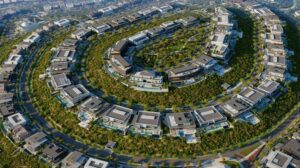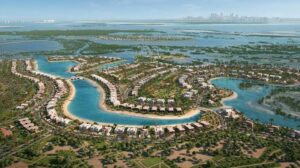
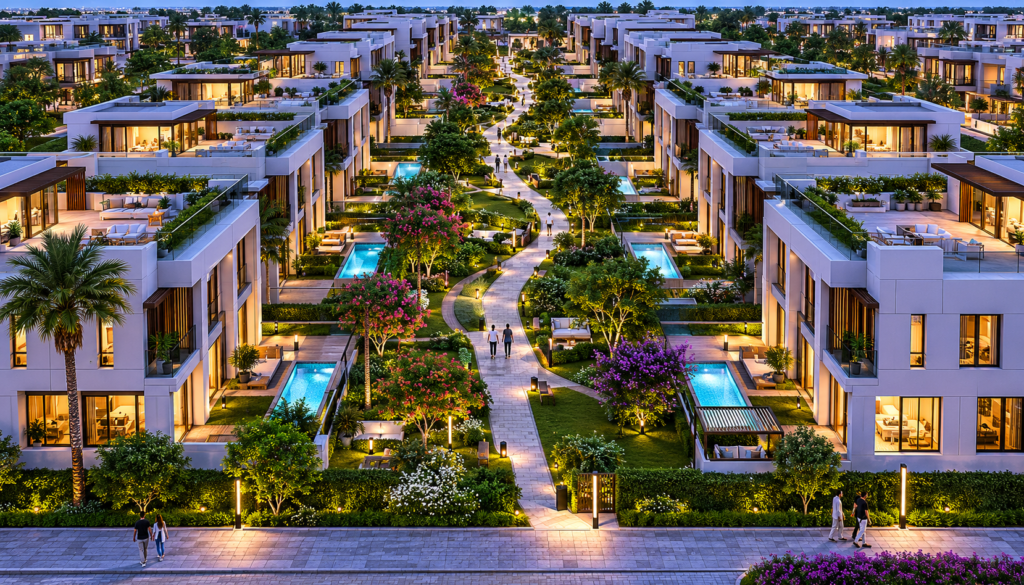
Hayat 7 is positioned within Dubai South, one of the few large-scale master-planned districts in Dubai still offering relatively affordable entry prices compared with established residential communities. For investors, the project is less about immediate rental income and more about securing exposure to a growth corridor tied to long-term infrastructure expansion.
The key question is not whether Hayat 7 offers modern apartments. The real question is whether the project’s pricing, rental demand outlook, and future resale prospects justify the capital commitment. Investors seeking the best property investment in Dubai must evaluate Hayat 7 through the lens of risk-adjusted returns rather than marketing promises.
Why Dubai South Continues to Attract Investor Capital
Dubai South has evolved from a speculative growth story into a district supported by real economic drivers. Its proximity to Al Maktoum International Airport, logistics zones, and expanding commercial activity creates a foundation for long-term population growth.
Property prices in Dubai South generally remain lower than those found in Dubai Marina, Business Bay, and Downtown Dubai. This pricing gap creates potential upside if infrastructure delivery and employment growth continue as expected.
A less obvious advantage is affordability. During periods of market uncertainty, communities with lower absolute ticket sizes often maintain broader buyer pools. That improves liquidity compared with premium locations where buyer demand can narrow rapidly during market corrections.
Where Hayat 7 Sits Within Dubai’s Pricing Curve
Current off-plan projects in Dubai South frequently range between AED 900 and AED 1,350 per square foot depending on location, unit mix, and payment plan structure. Hayat 7 appears positioned within the competitive segment of this range, allowing investors to enter at a lower capital threshold than many central Dubai projects.
For a one-bedroom apartment priced between AED 800,000 and AED 1 million, total acquisition costs typically increase by approximately 6–8% once registration fees and related charges are included.
The pricing question investors should ask is whether Hayat 7 offers enough discount compared with completed stock. If the premium over ready properties becomes excessive, appreciation potential becomes compressed. If pricing remains below comparable future inventory, the investment case strengthens considerably.
Hayat 7 Rental Yield Outlook: Income Potential Versus Real Costs
Rental yield is where many investors miscalculate returns. Gross yields often appear attractive, but net returns tell a different story after service charges, maintenance, vacancies, and leasing costs.
Based on prevailing Dubai South rental patterns, realistic gross rental yields may range between 6.5% and 8%. After adjusting for ownership expenses, investors should model net yields closer to 5.5%–6.8%.
This places Hayat 7 within the high rental yield property UAE category, although not necessarily among the highest-yielding opportunities available in Dubai.
The stronger investment thesis is likely appreciation combined with moderate cash flow rather than pure income generation. Investors focused solely on yield may find better immediate returns in selected International City or JVC assets, though often with different risk profiles.
Demand Drivers That Could Support Occupancy
Tenant demand quality matters more than headline demand numbers.
Dubai South increasingly attracts professionals working within aviation, logistics, transportation, and related industries. These employment sectors tend to create stable occupancy compared with tourism-dependent rental markets.
The affordability advantage also expands the tenant pool. As rental prices rise across central Dubai locations, budget-conscious tenants continue migrating toward emerging communities offering better value.
One overlooked factor is family demand. Communities capable of attracting long-term residents generally experience lower turnover, reducing vacancy risk and improving rental income consistency.
A Realistic Investor Scenario
Consider an investor purchasing a one-bedroom unit for AED 900,000.
Assume annual rental income reaches AED 63,000. After service charges, maintenance provisions, and leasing expenses, effective net income may fall to approximately AED 53,000–56,000 annually.
This produces a net yield range of roughly 5.8%–6.2%.
If property values appreciate by 4–6% annually during the first five years, total annualized returns could reach 10–12%. In a slower market environment with only 2–3% appreciation, investors may see returns closer to 7–8%.
These projections illustrate why appreciation potential carries greater importance than rental yield alone when evaluating Hayat 7.
How Hayat 7 Compares With Competing Investment Areas
Compared with Jumeirah Village Circle, Hayat 7 generally offers a lower entry price but less mature rental demand. JVC currently benefits from deeper resale liquidity and stronger transaction volumes.
Compared with Arjan, Dubai South still carries higher development risk but may offer greater long-term upside if infrastructure expansion accelerates.
Compared with Dubai Marina, Hayat 7 requires significantly less capital. However, Marina investors benefit from established demand and more predictable resale performance.
This comparison highlights an important point. Hayat 7 is not competing with premium Dubai assets. It competes within the emerging-community segment where investors prioritize growth potential over immediate certainty.
Which Investor Profile Fits Hayat 7 Best?
Hayat 7 appears most suitable for investors with a medium- to long-term investment horizon.
Buyers seeking immediate rental optimization may find stronger opportunities in mature communities with proven occupancy patterns. Hayat 7 becomes more compelling for investors willing to wait for district growth and infrastructure maturation.
End-users may also find value because lower acquisition costs create an alternative to increasingly expensive established neighborhoods.
The least suitable investor is one requiring short-term resale profits. Emerging districts often experience slower liquidity than mature markets.
Risks That Cannot Be Ignored
Supply pressure remains the primary concern.
Dubai South continues to attract significant developer activity. A large pipeline of future inventory can temporarily suppress rental growth and limit price appreciation.
Liquidity risk is another factor. During softer market cycles, resale demand tends to concentrate in established communities first.
Execution risk should also be considered. Infrastructure expansion timelines, economic conditions, and broader property market cycles influence future performance.
These risks do not invalidate the investment case. They simply mean investors should demand sufficient pricing advantages before committing capital.
Strategic Observation Most Buyers Miss
Many investors focus entirely on launch prices. A more important metric is future competition.
If multiple projects are delivered simultaneously within the same micro-market, rental growth can stagnate despite strong citywide demand.
The strongest Hayat 7 investment thesis emerges if purchase prices remain below future replacement costs. In that scenario, owners gain pricing support even if short-term market conditions fluctuate.
This is why disciplined entry pricing matters more than marketing incentives or payment plans.
Final Verdict
Hayat 7 presents a balanced risk-reward profile rather than an obvious bargain or a speculative gamble.
For investors seeking real estate ROI Dubai opportunities with moderate entry costs, expected net yields around 5.5%–6.8%, and potential long-term appreciation, the project deserves consideration.
The investment case relies more heavily on future capital growth than immediate cash flow. Investors expecting rapid resale gains may be disappointed, while those pursuing a five-to-ten-year holding strategy could benefit from Dubai South’s continued evolution.
At current market dynamics, Hayat 7 appears reasonably positioned rather than significantly undervalued. The project is best viewed as a growth-oriented investment supported by improving infrastructure, expanding employment hubs, and relatively accessible entry pricing.
Frequently Asked Questions
• What ROI can investors realistically expect from Hayat 7?
A blended annual return between 7% and 12% is achievable depending on rental performance, appreciation rates, and overall Dubai property market conditions.
• Does Hayat 7 qualify as a strong off-plan investment Dubai opportunity?
It offers competitive long-term potential, particularly for investors targeting growth districts rather than relying exclusively on immediate rental income.
• How does rental yield compare with other Dubai communities?
Expected yields are competitive for emerging districts, although some mature communities can generate stronger short-term cash flow.
• Is Dubai South becoming a serious investment destination?
Economic expansion, airport development, and commercial activity continue strengthening Dubai South’s long-term investment fundamentals.
• What is the biggest risk associated with Hayat 7?
Future supply growth remains the primary concern because excessive inventory can temporarily affect rents and resale pricing.
• Could property values appreciate significantly over time?
Sustained infrastructure development and population growth could support healthy appreciation, though outcomes depend on broader market conditions.
• Who is most likely to rent properties in Hayat 7?
Professionals, families, aviation-sector employees, and logistics workers represent a substantial portion of the expected tenant base.
• How important is the payment plan when evaluating returns?
Flexible payment structures can improve cash-on-cash returns by reducing upfront capital requirements during construction periods.
• Is Hayat 7 better suited for investors or end-users?
The project can work for both groups, though investors with longer holding periods may benefit most from future growth.
• Can Hayat 7 compete with established communities for investment capital?
It competes through lower entry pricing and growth potential rather than matching the liquidity and stability of mature districts.
About The Author