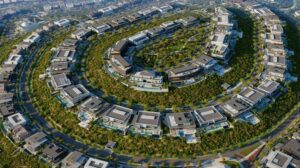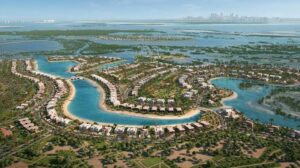
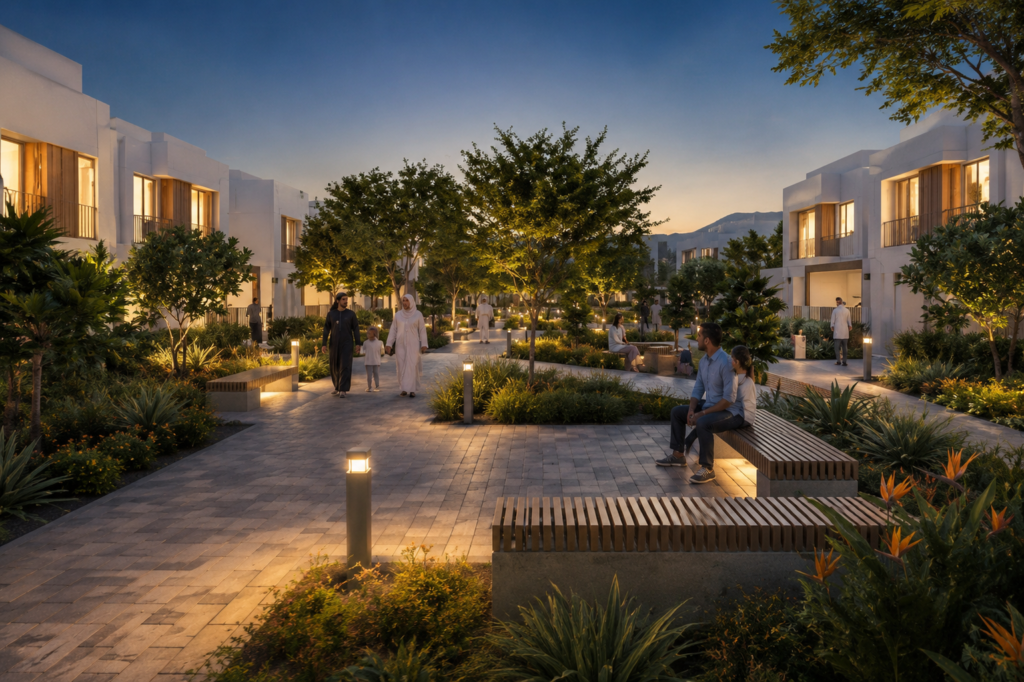
The investment case behind al ghadeer gardens is less about short-term speculation and more about strategic positioning before infrastructure maturity fully reflects in property prices. While many Abu Dhabi investors continue chasing premium waterfront zones, this project sits in a segment where affordability still supports rental absorption and future resale flexibility.
Developed by Aldar Properties within the wider Abu Dhabi growth belt, al ghadeer gardens targets a market segment often overlooked by high-ticket investors. That matters because mid-market communities historically maintain stronger occupancy resilience during slower transaction cycles.
Why al ghadeer gardens sits differently in today’s pricing landscape
Abu Dhabi’s residential market has experienced uneven price expansion over the last two years. Prime districts saw aggressive capital appreciation, while peripheral growth communities remained comparatively stable. Al ghadeer gardens enters during this imbalance.
Average entry pricing in similar townhouse-oriented communities currently ranges between AED 850 and AED 1,250 per square foot depending on connectivity and delivery timelines. Al ghadeer gardens remains positioned slightly below several competing suburban launches, which improves downside protection for investors entering before broader infrastructure saturation.
The more important observation is supply segmentation. Large-scale luxury inventory continues entering Abu Dhabi, but affordable family-oriented housing remains structurally tighter. Investors focusing only on headline appreciation may overlook this imbalance.
How the cost structure affects real investor returns
The advertised price point appears attractive initially, but actual investment viability depends on holding efficiency after service charges, financing costs, and vacancy assumptions are considered.
For a mid-sized townhouse acquisition around AED 1.8M–2.3M, realistic annual rental income could stabilize between AED 115K and AED 145K depending on handover timing and furnishing quality. After accounting for maintenance reserves, service expenses, and potential vacancy buffers, net rental yield may realistically settle around 5.6%–6.4%.
That yield is not market-leading compared with some Dubai off-plan investment opportunities, yet the lower volatility profile changes the equation. Investors prioritizing capital preservation may view moderate but stable income more favorably than aggressive appreciation plays carrying higher liquidity risk.
Payment plan structure also matters here. Extended post-handover schedules improve leverage efficiency for investors deploying capital across multiple UAE properties simultaneously.
Where al ghadeer gardens gains demand momentum
Al Ghadeer benefits from a geographic advantage many investors underestimate. It captures commuter demand flowing between Abu Dhabi and Dubai without competing directly against premium urban districts.
This positioning improves tenant diversity. Rather than relying heavily on short-term tourism-driven demand, the community attracts long-term residents seeking cost efficiency and accessibility. That distinction supports steadier occupancy during softer economic periods.
Another overlooked factor is demographic sustainability. Mid-income family housing tends to produce longer tenancy duration compared with investor-heavy apartment districts where turnover remains elevated. Lower tenant churn directly improves net rental income Dubai investors actually retain.
The numbers behind a realistic holding scenario
Consider an investor acquiring a unit at AED 2M with a 35% upfront capital deployment under an extended payment plan. Assuming moderate appreciation of 18%–24% across a five-year horizon and stabilized rental yield near 6%, the blended annualized return could approach 9%–11%.
That projection becomes weaker if competing supply accelerates aggressively around the Abu Dhabi outskirts. However, downside exposure remains comparatively manageable because entry pricing is not excessively detached from local income fundamentals.
This creates an uncommon profile in the UAE market: limited speculative upside, but stronger defensive positioning than highly inflated premium districts.
Compared with newer suburban launches, is pricing justified?
Compared with newer Abu Dhabi townhouse communities carrying higher launch premiums, al ghadeer gardens benefits from relative affordability. Several competing projects now exceed AED 1,350 per square foot despite offering similar commuting accessibility.
Against Dubai alternatives, the yield comparison becomes more nuanced. Dubai may produce higher short-term appreciation, especially in high-demand off-plan investment Dubai corridors, but volatility and investor saturation are also materially higher.
Al ghadeer gardens therefore competes less on explosive growth and more on balanced risk-adjusted return. Investors chasing aggressive flipping margins may find better opportunities elsewhere. Long-duration investors may view the stability differently.
Which investor profile aligns best with this project
This project favors investors prioritizing steady occupancy, manageable entry pricing, and moderate long-term appreciation instead of speculative capital spikes.
Portfolio diversification buyers also benefit because the asset behaves differently from high-volatility Dubai inventory. That lowers concentration risk for investors already heavily exposed to premium urban towers.
End-users gain a secondary advantage through affordability relative to newer Abu Dhabi villa communities. That owner-occupier demand can eventually support resale liquidity if transaction conditions tighten.
The risks many promotional articles avoid mentioning
Liquidity depth remains a genuine concern. Peripheral communities generally require longer resale timelines during weaker market cycles, especially when new supply launches nearby at discounted prices.
There is also execution risk tied to broader infrastructure expansion. Communities positioned around future growth narratives depend heavily on transport connectivity and commercial activation materializing as expected.
Rental ceiling pressure could emerge as additional suburban inventory enters the Abu Dhabi market over the next three to five years. Investors assuming perpetual rental escalation may misprice long-term returns.
Why timing matters more than headline ROI
The strongest argument for al ghadeer gardens is not immediate yield superiority. The opportunity exists because pricing has not yet fully absorbed future corridor expansion between Abu Dhabi and Dubai.
That creates a narrower but potentially safer investment window. Investors entering after major infrastructure milestones may face compressed yields and weaker entry efficiency.
Capital growth here is likely to be gradual rather than explosive. Yet historically, assets purchased before infrastructure maturity often outperform once surrounding communities become operationally established.
Final Verdict
Al ghadeer gardens is unlikely to become the highest-performing speculative asset in the UAE market. The project instead fits investors seeking defensive exposure with stable tenant demand, moderate rental income, and lower pricing distortion compared with overheated districts.
The investment case strengthens further for buyers prioritizing portfolio durability over rapid flipping. Compared with aggressively priced luxury inventory, the downside profile appears more controlled.
For investors evaluating long-term UAE residential exposure rather than short-cycle momentum trades, al ghadeer gardens presents a rational — though not risk-free — allocation opportunity.
FAQs
- Is al ghadeer gardens positioned for appreciation or rental stability?
Al ghadeer gardens currently appears stronger as a stable income-oriented asset, although gradual infrastructure-driven appreciation could improve long-term resale pricing over time. - What rental yield range looks realistic for investors here?
Most investors should model net rental yields between 5.5% and 6.5% after factoring vacancy assumptions, service costs, and maintenance reserves. - Does the payment plan improve investment flexibility?
Extended payment structures reduce immediate capital pressure and allow investors to diversify exposure across multiple UAE property investment opportunities simultaneously. - How does al ghadeer gardens compare with Dubai investments?
Compared with many Dubai projects, al ghadeer gardens offers lower speculative upside but potentially stronger occupancy resilience and more predictable holding costs. - Is the current property price Dubai trend affecting Abu Dhabi suburbs?
Rising Dubai pricing has indirectly pushed some investors toward Abu Dhabi suburban communities where entry costs remain comparatively more manageable. - What is the biggest investment risk in this project?
Future supply pressure across suburban Abu Dhabi communities could limit rental growth and slow resale liquidity during weaker market conditions. - Who is most likely to rent properties in this community?
The project primarily attracts mid-income professionals and families seeking commuter accessibility between Abu Dhabi and Dubai without premium urban pricing. - Can investors expect quick resale opportunities after handover?
Short-term flipping potential appears moderate because buyer demand here is driven more by end-use affordability than speculative investor activity. - Does al ghadeer gardens suit conservative investors?
Investors prioritizing capital preservation and consistent occupancy may find this project more aligned with defensive portfolio allocation strategies. - Is this considered one of the best property investment in Dubai alternatives?
For buyers seeking lower volatility outside Dubai’s premium pricing cycle, al ghadeer gardens represents a competitive UAE residential investment alternative.
About The Author